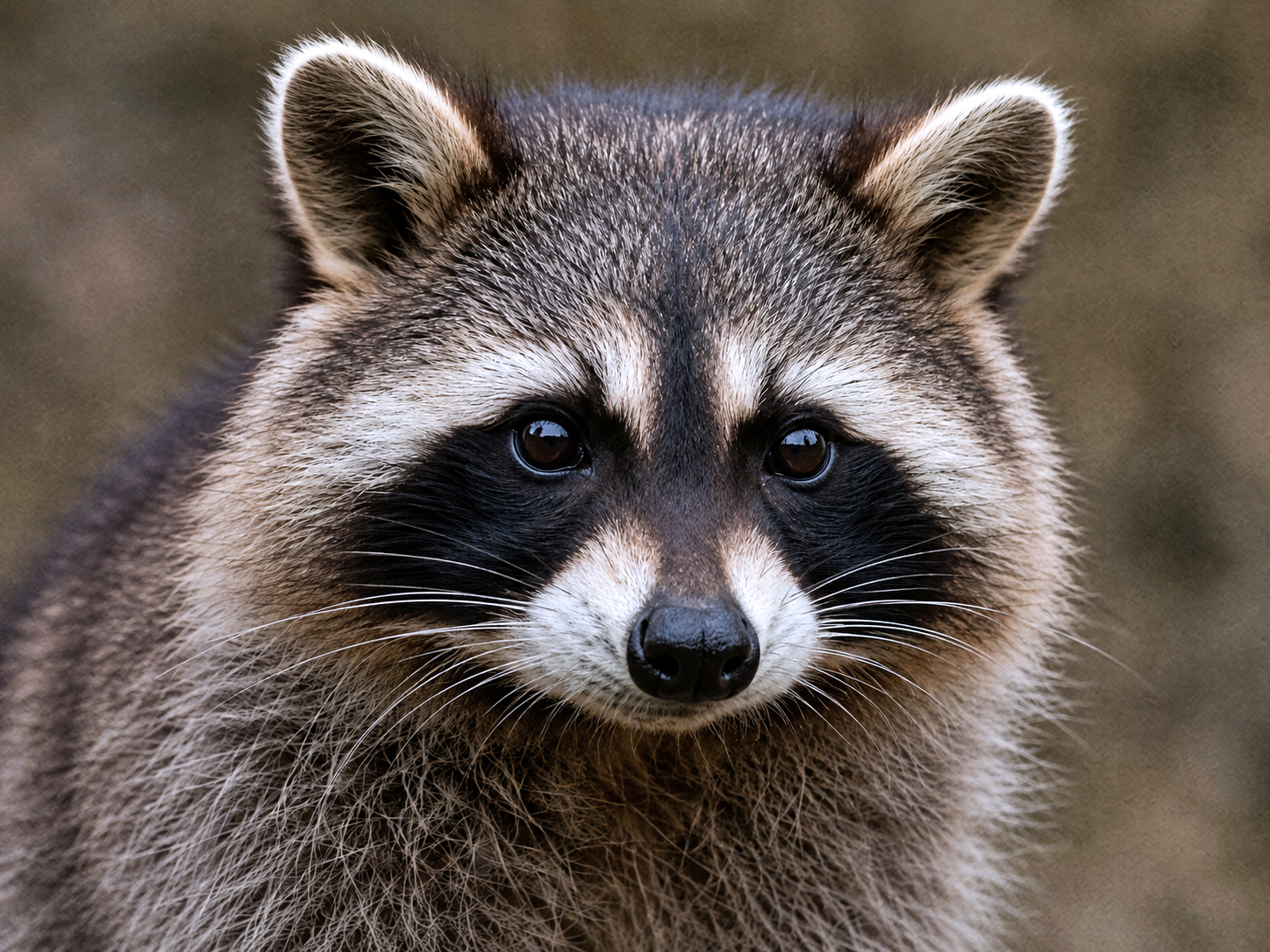
There’s a little creature prowling through neighborhoods, forests, and wetlands across North America, and it looks dressed for a heist.
With a stripe of dark fur sweeping across its eyes like a tiny superhero mask, the raccoon is one of the most recognizable animals in the wild. We call it the masked bandit, the trash panda, the masked marauder, but that famous face isn’t just for show.
So what is the mask for?
Night Vision Advantage
Raccoons are mostly nocturnal, which means much of their foraging and exploring happens after dark.
Scientists believe the dark fur around a raccoon’s eyes helps absorb light and reduce glare, much like athletes wear black eye paint under stadium lights. For a raccoon, glare might come from moonlight, streetlights, water, or other shiny surfaces.
A Cloak of Shadows
The mask also helps with camouflage.
When a raccoon hides under a bush or peeks from a tree hollow, its dark markings help break up its face’s outline. Instead of one clear round shape, a predator or prey animal sees patches of light and dark.
The mask makes it a little easier for the raccoon to disappear into its surroundings.
I Know That Face
That bold facial pattern may help raccoons notice and distinguish one another’s faces.
To our eyes, raccoons often look alike, but their masks vary in shape, width, and shading, giving each animal a slightly different appearance. Researchers think these subtle mask differences could play a role in how raccoons recognize and respond to one another.
A Tiny Bandit in the Making
Raccoon kits are born tiny, with their eyes closed, and depend on their mother for food, warmth, and protection until they are old enough to explore on their own. As they grow during their first weeks of life, their famous mask and ringed tail become darker and more distinct.
Before long, a tiny masked face is peering out from the den.
The Bandit Who Earns Its Name
The raccoon didn’t choose its look. Evolution slowly shaped features that help these adaptable animals survive, see in the dark, hide from danger, and find their way.
What looks to us like a disguise may actually be a useful survival tool.
Next time you spot a raccoon peering from behind a fence or investigating your recycling bin with those busy, dexterous paws, take a moment to appreciate what you’re seeing: one of nature’s most resourceful and resilient wild neighbors.
Masked and curious.
That’s the raccoon.
Meet Dad and Cal, the raccoon pair at the heart of One More Thing, Dad! (Promise!), where bedtime is never as simple as it sounds.